

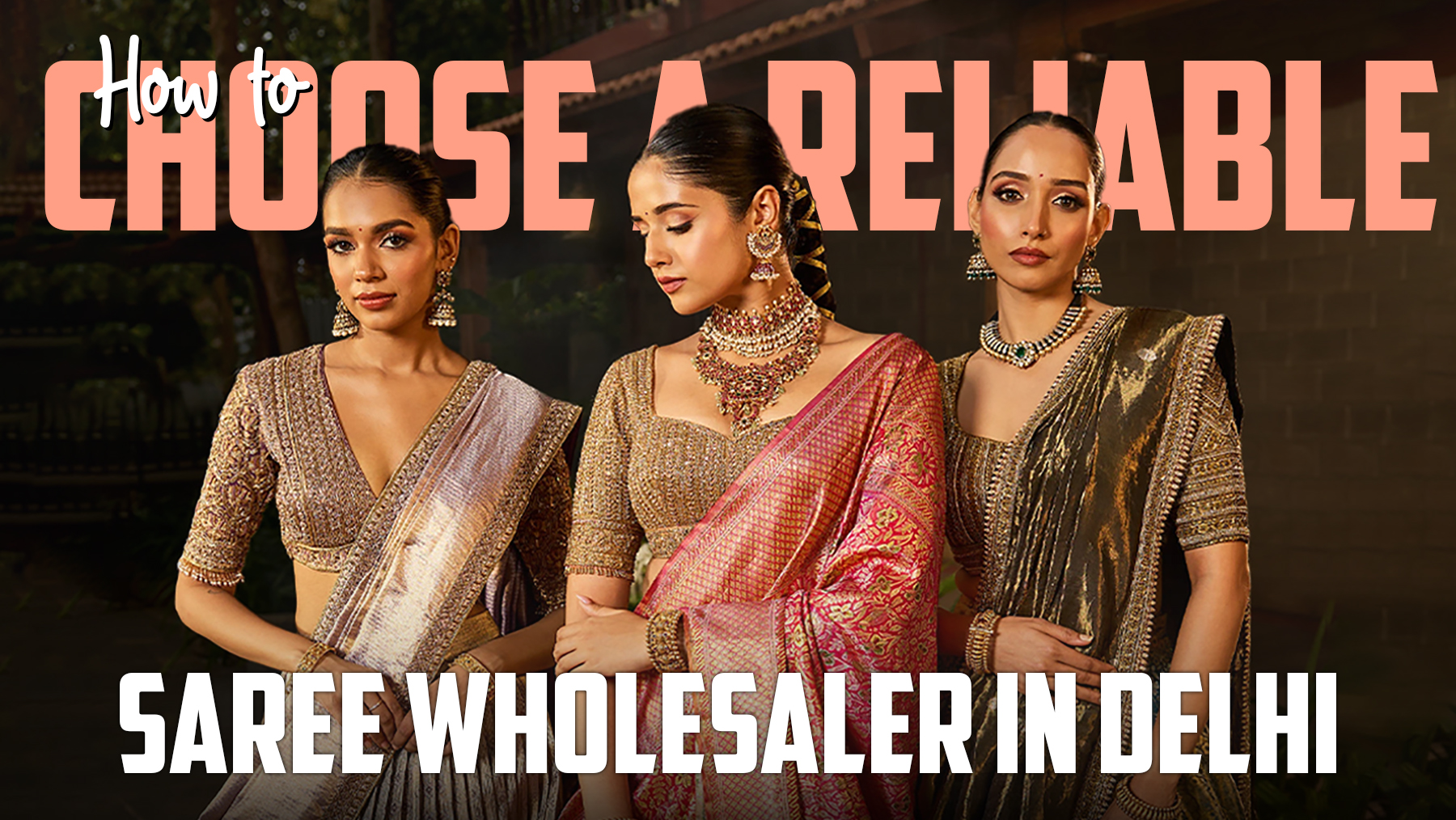
Finding a reliable saree wholesaler in Delhi is one of the most important decisions for a retailer, boutique owner, reseller, or online fashion business. Delhi has a huge wholesale textile ecosystem, and markets such as Chandni Chowk offer sarees across different fabrics, designs, occasions, and price ranges. But having many suppliers to choose from also creates one common problem: how do you know which wholesaler is actually right for your business?
The cheapest supplier is not always the best supplier. A reliable wholesale partner should offer consistent quality, transparent pricing, suitable minimum order quantities, updated designs, proper billing, dependable dispatch, and good communication after the order is placed.
For retailers looking for a long-term sourcing partner, Ajmera Chandni Chowk provides a practical option for exploring wholesale saree collections in one of Delhi’s best-known ethnic wear markets.
Why Choosing the Right Saree Wholesaler Matters
A saree wholesaler directly affects your product quality, selling price, customer satisfaction, and profit margin. If the supplier frequently changes fabric quality, sends inconsistent colours, delays dispatches, or does not provide clear pricing, these problems eventually reach your customers.
A good wholesaler, on the other hand, helps you maintain a dependable collection. This becomes especially important during wedding and festive seasons when retailers need fresh designs and timely stock.
Delhi’s wholesale market includes several commercial areas, but Chandni Chowk remains one of the most prominent destinations for saree and ethnic wear sourcing. Buyers can compare different collections within a relatively concentrated market and select suppliers according to their customer segment and budget.
1. Check the Saree Quality Before Placing a Large Order
The first thing to check when selecting a saree wholesaler in Delhi is product quality. Never judge a supplier only by catalogue photographs or a low quoted price.
Ask for detailed product information and, whenever possible, inspect the saree physically. Check the fabric, weaving or printing quality, embroidery, borders, finishing, blouse material, colour consistency, and overall presentation.
If you are buying different categories, check samples from each category rather than assuming that the quality will be identical across the entire collection.
Things to check before buying
- Fabric and material quality
- Print or embroidery finishing
- Border and pallu finishing
- Colour consistency
- Blouse piece details
- Packaging quality
- Actual product versus catalogue images
2. Compare Wholesale Pricing, Not Just the Cheapest Price
Price is obviously important in wholesale business, but choosing a supplier simply because they quote the lowest price can create problems later. Two sarees may look similar in photographs but can differ significantly in fabric, finishing, work, packaging, and durability.
Instead of asking only, “What is your wholesale price?”, compare the complete value of the product. Check the saree quality, order quantity, packing, GST billing, shipping arrangements, and after-sales support.
A useful approach is to compare at least three suppliers for the same category. This gives you a clearer understanding of the market price and helps you identify whether a quotation is genuinely competitive.
3. Understand the Minimum Order Quantity
Minimum Order Quantity, commonly called MOQ, is another important factor when selecting a wholesale saree supplier. Different wholesalers may have different requirements. Some may sell according to the number of pieces, while others may set a minimum order value or quantity per design.
Before confirming an order, ask clearly about the MOQ. This is particularly important for new boutique owners and small retailers who may not want to purchase a very large quantity of one design.
A supplier whose MOQ matches your business size can help you maintain a wider collection without locking too much money into slow-moving inventory.
4. Look for a Wholesaler With a Variety of Saree Collections
A reliable saree wholesaler should ideally offer enough variety to match different customer requirements. Delhi’s wholesale market is known for its broad selection, including daily-wear, festive, party-wear, designer-style, silk, cotton, georgette, chiffon, and other saree categories.
For a retailer, having access to multiple categories from one supplier can simplify purchasing and reduce the need to coordinate with too many vendors.
Popular saree categories to consider
- Designer sarees
- Party wear sarees
- Wedding sarees
- Silk sarees
- Cotton sarees
- Georgette sarees
- Chiffon sarees
- Festive wear sarees
- Daily wear sarees
- Embroidered sarees
5. Check Whether the Supplier Keeps Up With Fashion Trends
Fashion changes quickly, and saree retailers need new designs regularly. A wholesaler who continues selling the same collection for months may not be able to support a business that depends on repeat customers.
Ask how frequently new collections are introduced. Look at the supplier’s latest catalogue and compare it with current customer demand in your target market.
For example, a boutique serving wedding customers may need a different collection from a retailer selling affordable everyday sarees. The right wholesaler should understand these differences rather than offering the same products to every buyer.
6. Verify Billing and Business Documentation
Proper documentation is another sign of a professional wholesale supplier. Before placing a significant order, discuss invoicing, GST details where applicable, payment terms, and the documentation you will receive with your purchase.
Clear billing protects both the buyer and supplier and makes it easier to maintain proper business records. Avoid making a large payment to an unknown supplier without first confirming their business details and order terms.
7. Ask About Dispatch and Delivery Time
For a fashion retailer, timing matters. A delayed saree shipment can mean missing a festival, wedding season, promotional campaign, or customer commitment.
Before ordering, ask the wholesaler about the expected dispatch timeline, packing method, transport options, and delivery arrangements. If you are buying from outside Delhi, also confirm how the supplier handles outstation orders.
Reliable communication about dispatch dates is often more valuable than a small difference in the product price.
8. Check Communication and Customer Support
A wholesaler may have excellent products, but if communication is poor, managing future orders can become difficult. Pay attention to how quickly the supplier responds to enquiries and whether they provide clear answers about product availability, prices, quantities, and dispatch.
This becomes even more important when you are placing repeat orders. A long-term wholesale relationship should feel professional and straightforward rather than confusing every time you need to restock.
9. Start With a Trial Order
If you are dealing with a new saree supplier in Delhi, consider starting with a smaller trial order before committing to a large purchase. This gives you an opportunity to evaluate the actual product, packaging, communication, delivery time, and customer response.
Once the supplier consistently meets your expectations, you can gradually increase your order quantity.
This approach is especially useful for new retailers and online sellers who are still learning which saree categories perform best with their customers.
10. Choose a Supplier You Can Build a Long-Term Relationship With
The best wholesale supplier is not necessarily the one you purchase from only once. A strong supplier relationship can make future sourcing easier because the wholesaler starts understanding your preferred categories, price range, designs, and order quantities.
For a growing saree business, long-term supplier relationships can also make stock planning more efficient. You know who to contact when you need festive collections, wedding sarees, new designs, or regular replenishment.
Why Consider Ajmera Chandni Chowk for Wholesale Sarees?
Ajmera Chandni Chowk is positioned in the heart of Delhi’s established ethnic wear and textile trading environment. The brand focuses on serving buyers who are looking for sarees and ethnic fashion collections for retail and wholesale business requirements.
For buyers, the advantage is not only access to sarees but also the opportunity to discuss their requirements directly. Whether you are a boutique owner, saree retailer, reseller, or fashion business owner, it is important to communicate your target customer, preferred price segment, quantity, and required designs before finalising your purchase.
Ajmera Chandni Chowk’s existing online content also highlights its focus on wholesale saree collections, including different styles and categories for bulk buyers.
Quick Checklist Before Choosing a Saree Wholesaler
- Check the actual product quality.
- Compare prices from multiple suppliers.
- Understand the MOQ before ordering.
- Ask about the latest collection and new designs.
- Confirm GST billing and payment terms.
- Check packing and dispatch timelines.
- Understand return or replacement conditions.
- Start with a trial order when dealing with a new supplier.
- Evaluate communication and customer support.
- Choose a supplier who can support your future business growth.
Conclusion
Choosing a reliable saree wholesaler in Delhi requires more than comparing prices. Quality, design variety, MOQ, billing, delivery, communication, and long-term reliability all play an important role in determining whether a supplier is suitable for your business.
Chandni Chowk remains one of Delhi’s most important wholesale destinations for sarees and ethnic wear, giving retailers access to a large and diverse sourcing ecosystem.
If you are looking for a wholesale saree partner in Chandni Chowk, Ajmera Chandni Chowk can be a convenient option to explore. The key is to clearly communicate your requirements, check the collection, understand the order terms, and build the relationship based on consistent quality and service.
Frequently Asked Questions
1. How do I find a reliable saree wholesaler in Delhi?
Look for a supplier with consistent product quality, transparent wholesale pricing, suitable MOQ, updated collections, proper billing, dependable dispatch, and responsive customer support. It is also sensible to compare several suppliers and place a trial order before making a large investment.
2. Which is the best area to buy sarees wholesale in Delhi?
Chandni Chowk is one of Delhi’s most prominent wholesale destinations for sarees and ethnic wear. Areas and lanes around the market offer a wide variety of sarees, fabrics, bridal collections, and fashion products for retailers and bulk buyers.
3. What should I check before buying sarees wholesale?
Check fabric quality, colour consistency, embroidery or print finishing, blouse material, packaging, price, MOQ, billing, dispatch time, and replacement conditions. Always compare the actual product quality against the supplier’s catalogue or product images.
4. What is MOQ in saree wholesale?
MOQ means Minimum Order Quantity. It is the minimum quantity or order value that a wholesaler requires for a purchase. MOQ can differ between suppliers and may also vary according to the saree category, design, or order requirements.
5. Can small boutiques buy sarees directly from wholesalers in Delhi?
Yes. Many Delhi wholesalers work with boutiques, small retailers, resellers, and online sellers. However, buyers should confirm the supplier’s MOQ before ordering and choose quantities that match their available budget and expected sales.
6. How can I compare two saree wholesalers?
Compare them on more than price. Create a simple comparison covering product quality, fabric, design variety, MOQ, wholesale price, billing, dispatch time, packaging, payment terms, and customer support. This gives you a better picture of the total value offered by each supplier.
7. Is Chandni Chowk good for wholesale saree business?
Yes. Chandni Chowk is a major textile and ethnic wear trading destination in Delhi. Its large network of wholesalers and wide product variety makes it useful for retailers, boutique owners, resellers, and businesses looking to source sarees in bulk.
8. Should I place a large order with a new saree supplier?
It is generally better to start with a manageable trial order when working with a new supplier. You can use the first order to evaluate actual product quality, packing, delivery, communication, and customer response before increasing your purchase volume.
9. What types of sarees can I buy wholesale in Delhi?
Wholesale markets in Delhi offer many categories, including cotton, silk, georgette, chiffon, printed, embroidered, party-wear, designer-style, wedding, festive, and daily-wear sarees. Availability depends on the individual supplier and current collection.
10. How can I contact Ajmera Chandni Chowk for wholesale sarees?
You can contact Ajmera Chandni Chowk directly to discuss your wholesale saree requirements, collection preferences, and order quantities.
Get In Touch
Ajmera Chandni Chowk
Phone: +91 98111 01484
Email: info@ajmerachandnichowk.com
Address: 4310 Jogiwara Gali Bhairov Wali, Nai Sarak, Chandni Chowk, Delhi, 110006
If you are planning to purchase sarees in bulk for your retail store, boutique, reseller business, or online fashion business, contact the Ajmera Chandni Chowk team to discuss your requirements.